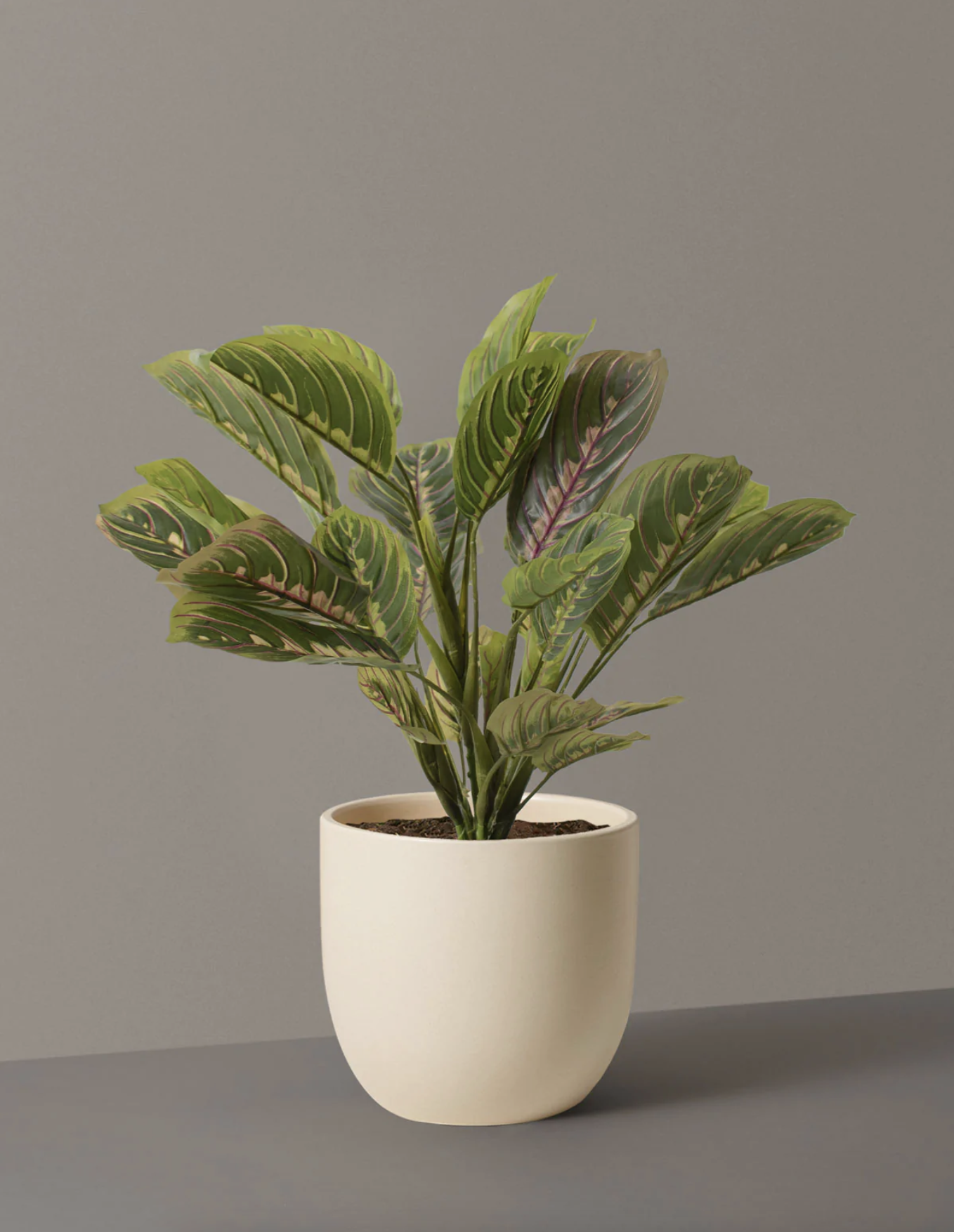
Maranta is the type-genus of Marantaceae, and is named in honor of Bartolomeo Maranta, an Italian physician and botanist of the 16th century who organized his knowledge of botanical pharmacology by nomenclature, species identification and medicinal properties.
‘Prayer plant’ is a colloquial term that refers to members of genus Maranta, to which genus Calathea is closely-related. In reality, both are considered to be ‘prayer plants.’ The name comes from the tendency of plants in this family to droop, or ‘pray’ at night. Some of the most popular prayer plants in cultivation are Maranta leuconeura or M. leuconeura ‘Tricolor.’ Many species of Maranta produce rosmarinic acid, one of the active components of rosemary that give it the characteristic rosemary scent.
Sunlight |
Thrives in medium to bright indirect light. Not suited for intense, direct sun. |
Water |
Water every 1–2 weeks, allowing the soil to dry out half way down between waterings. Expect to water more often in brighter light and less often in lower light. Marantas can be sensitive to hard tap water. Try using filtered water or leaving water out overnight before using. |
Humidity |
Normal room humidity is fine, but it prefers more humidity if possible. |
Temperature |
65°F–85°F (18°C–30°C). It’s best not to let it go below 60°F (15°C). |
This plant is pet-friendly and is not toxic to cats or dogs. Best practice is always to keep houseplants out of reach of small children and pets.