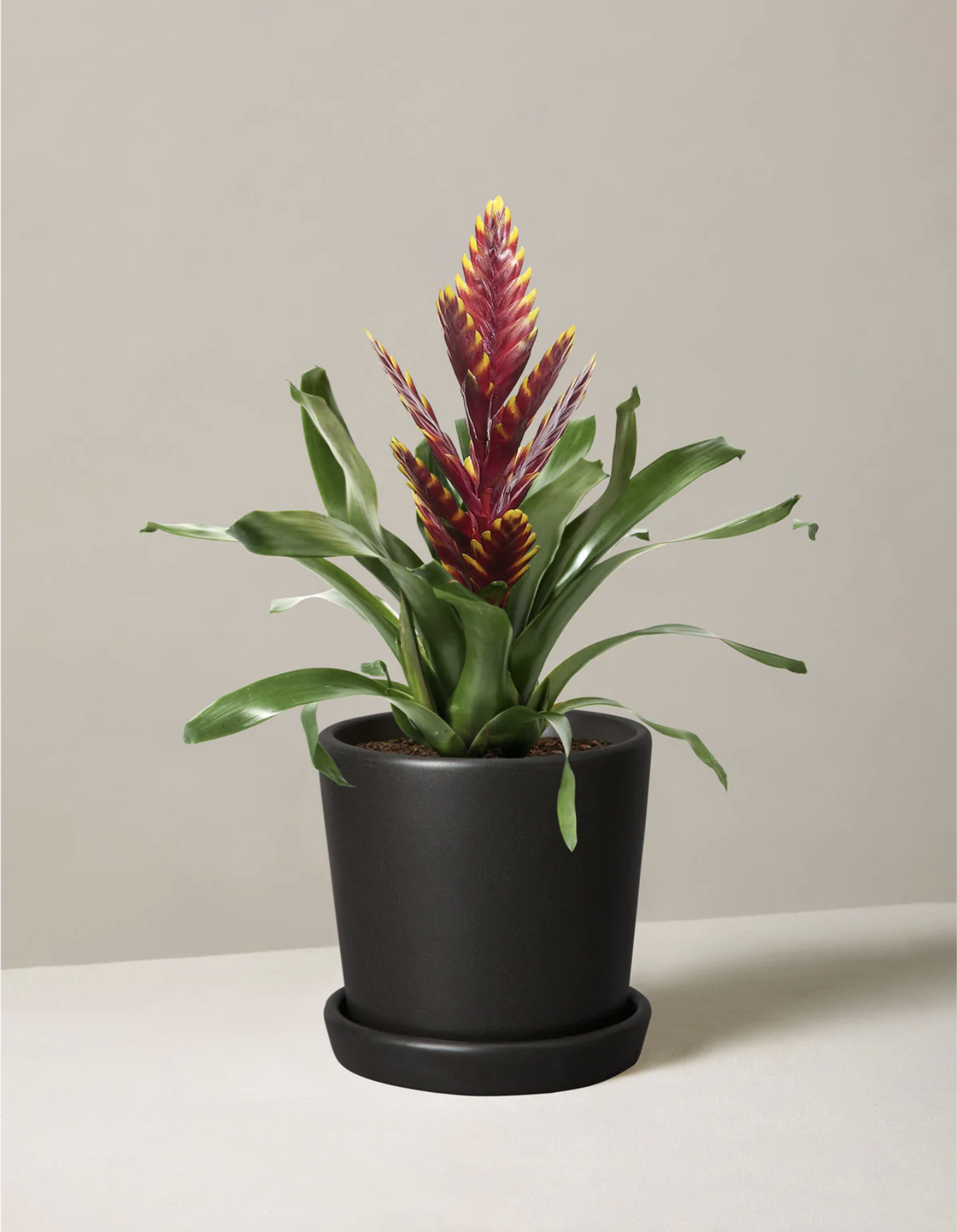
Bromeliads are part of the monocot group of flowering plants. In scientific terms, this means that their seeds contain just one leaf; they have an unusual system of thin, fibrous roots; and their leaves are “parallel veined.” In practical terms, it means that they are often able to conserve water better than many other tropical plants. All bromeliads additionally feature trichomes, hair-like growths that shield the plants from harsh sunlight and help them to absorb moisture even in dry climates.
Sunlight |
Bromeliads prefer bright indirect to direct light. Generally speaking, the softer and greener the bromeliad, the less light—and more water—it prefers. The more rigid and colorful the bromeliad, the more light it prefers, and the more succulent it is. |
Water |
Many bromeliads are among the more drought-tolerant houseplants and dislike being over-watered. You can keep them healthy by watering the soil every one to two weeks in the warmer months, and every two to three weeks in the colder months. Also remember the above guideline about light and watering: The softer and greener the bromeliad, the less light—and more water—it prefers. |
Humidity |
Since they originate in tropical forests, bromeliads do best in somewhat humid climates (50-75% humidity), and it is recommended that you mist them once to twice a week no matter what level of humidity you experience in your home. Note that if its environment is particularly humid, it will require less frequent waterings than it would if its environment were on the dry side. |
All varieties of bromeliad are safe for cats and dogs, but is still a good idea to keep your cat or dog away from these plants—if they get their paws on a bromeliad, it may give them a stomach ache.